
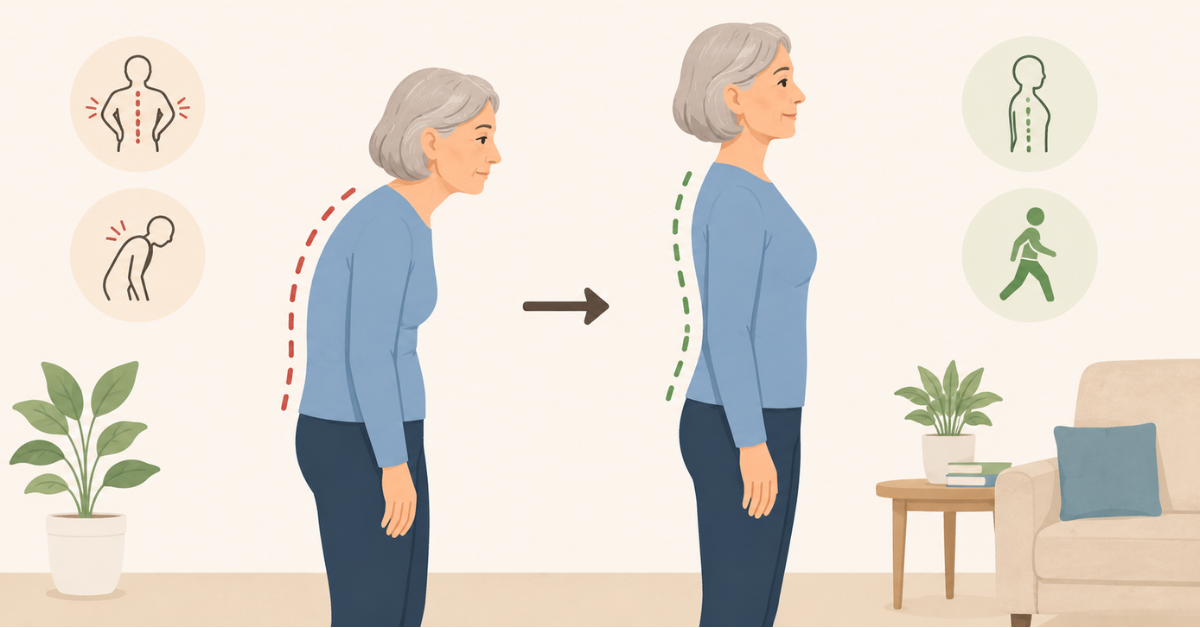
As we age, our bodies naturally go through changes that can affect posture, flexibility, and mobility. After 50, many people begin to notice rounded shoulders, neck stiffness, back pain, or difficulty standing upright for long periods. While these changes may seem like a normal part of ageing, poor posture should not simply be accepted as unavoidable.
The good news is that posture can often be improved with small, consistent adjustments. Simple posture correction habits can reduce pain, improve balance, increase confidence, and even help you breathe and move more comfortably. The key is understanding how posture changes with age and taking small steps that create a big impact over time.
Why Posture Changes After 50
Posture refers to how we hold our bodies while sitting, standing, or moving. Good posture keeps the body aligned properly, reducing stress on muscles and joints.
As people age, several factors contribute to posture changes:
- Muscle loss
- Reduced bone density
- Joint stiffness
- Arthritis
- Less physical activity
- Long hours sitting
- Weak core muscles
- Technology use and forward head posture
Over time, these factors can cause the shoulders to round forward, the head to lean ahead of the body, and the spine to lose its natural alignment.
Poor posture may develop slowly, making it difficult to notice until discomfort begins affecting daily activities.
Common Signs of Poor Posture
Many adults over 50 experience posture-related symptoms without realizing posture may be the cause.
Common signs include:
- Neck pain or stiffness
- Rounded shoulders
- Lower back pain
- Headaches
- Tight hips
- Difficulty standing straight
- Balance problems
- Fatigue after standing or walking
- Reduced flexibility
Posture also affects appearance and confidence. Standing upright can make a person look taller, healthier, and more energetic.
The Hidden Health Effects of Poor Posture
Poor posture affects more than the spine. It can influence many areas of physical health.
Reduced Breathing Efficiency
Slouching compresses the chest and lungs, making it harder to take deep breaths. Over time, shallow breathing may contribute to low energy levels and fatigue.
Increased Joint Stress
When the body is out of alignment, certain muscles and joints must work harder to support movement. This extra strain may increase pain in the knees, hips, neck, and lower back.
Balance and Fall Risk
Posture plays a major role in balance and stability. Forward head posture or weak core muscles may increase the risk of falls, which become more dangerous with age.
Digestive Discomfort
Poor sitting posture can place pressure on digestive organs, sometimes contributing to bloating or discomfort after meals.
Small Fixes That Make a Big Difference
Improving posture after 50 does not require extreme workouts or complicated routines. In many cases, small daily changes create noticeable improvements over time.
1. Strengthen Your Core
Core muscles support the spine and help maintain balance. Weak abdominal and back muscles often contribute to slouching.
Simple exercises that may help include:
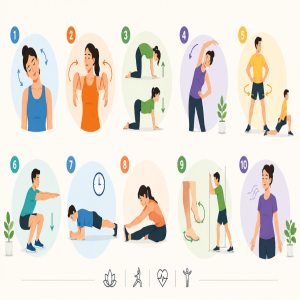
- Pelvic tilts
- Bridges
- Bird-dog exercises
- Gentle planks
- Seated knee lifts
Even a few minutes of core strengthening several times a week can support better posture.
2. Stretch Tight Muscles
Muscles in the chest, hips, and neck often become tight from prolonged sitting or poor posture habits.
Helpful stretches include:
- Chest-opening stretches
- Neck stretches
- Shoulder rolls
- Hip flexor stretches
- Cat-cow yoga stretch
Gentle stretching improves flexibility and helps the body move more naturally.
3. Adjust Your Sitting Position
Many posture problems begin with how we sit. Spending hours hunched over phones, laptops, or televisions can strain the neck and spine.
Try these simple sitting adjustments:
- Keep feet flat on the floor
- Sit with your shoulders relaxed
- Support the lower back
- Avoid crossing legs for long periods
- Keep screens at eye level
Taking short standing or walking breaks every 30–60 minutes can also reduce stiffness.
4. Improve Walking Posture
Walking posture matters just as much as sitting posture.
When walking:
- Keep your chin parallel to the floor
- Relax your shoulders
- Engage your core gently
- Swing your arms naturally
- Avoid looking down constantly at your phone
Walking with proper alignment helps strengthen posture muscles over time.
5. Focus on Footwear
Unsupportive shoes can affect body alignment from the ground up. Shoes that provide stability and cushioning may reduce stress on the knees, hips, and spine.
Avoid wearing worn-out footwear regularly, especially during long walks or exercise.
The Role of Strength Training After 50
Strength training becomes increasingly important with age because muscle mass naturally declines over time. Weak muscles contribute to poor posture and reduced stability.
Light resistance training can:
- Improve spinal support
- Increase balance
- Strengthen bones
- Reduce stiffness
- Enhance mobility
Resistance bands, light dumbbells, or bodyweight exercises may all help support posture correction when performed safely.
How Technology Affects Posture
Modern technology has created a common problem known as “tech neck.” Looking down at phones or leaning toward screens places strain on the neck and upper back.
Over time, this may lead to:
- Neck pain
- Shoulder tension
- Headaches
- Rounded upper back posture
Simple habits can help reduce strain:
- Raise screens to eye level
- Hold phones higher
- Take regular movement breaks
- Stretch the neck throughout the day
Awareness is often the first step toward correcting posture habits.
Can Posture Improvement Reduce Pain?
In many cases, yes. While posture correction may not eliminate every cause of pain, improving body alignment often reduces strain on muscles and joints.
People frequently notice improvements in:
- Back pain
- Neck tension
- Shoulder discomfort
- Headaches
- Hip tightness
Better posture also improves movement efficiency, making daily tasks feel easier and less exhausting.
When to Seek Professional Help
Some posture changes may require professional guidance, especially if pain is severe or mobility is limited.
A healthcare provider or physical therapist may help if you experience:
- Persistent pain
- Numbness or tingling
- Severe spinal curvature
- Frequent falls
- Difficulty walking
- Sudden posture changes
Professional exercises and posture training programs can provide targeted support.
Building Better Posture Habits Daily
Posture correction works best through consistency, not perfection. Small daily habits repeated over time can retrain the body gradually.
Helpful daily reminders include:
- Stand tall while brushing teeth
- Check shoulder position while using devices
- Stretch during TV breaks
- Practice deep breathing
- Engage your core while walking
These simple adjustments may seem minor, but together they create lasting improvements.
Final Thoughts
Posture changes after 50 are common, but they are not something you must simply accept. Small posture corrections can improve comfort, mobility, balance, confidence, and overall quality of life.
By strengthening muscles, improving flexibility, adjusting daily habits, and becoming more aware of body alignment, it is possible to stand taller and move more comfortably at any age.
The journey toward better posture does not require dramatic changes. Often, the smallest fixes create the biggest impact over time.



Comments (0)