
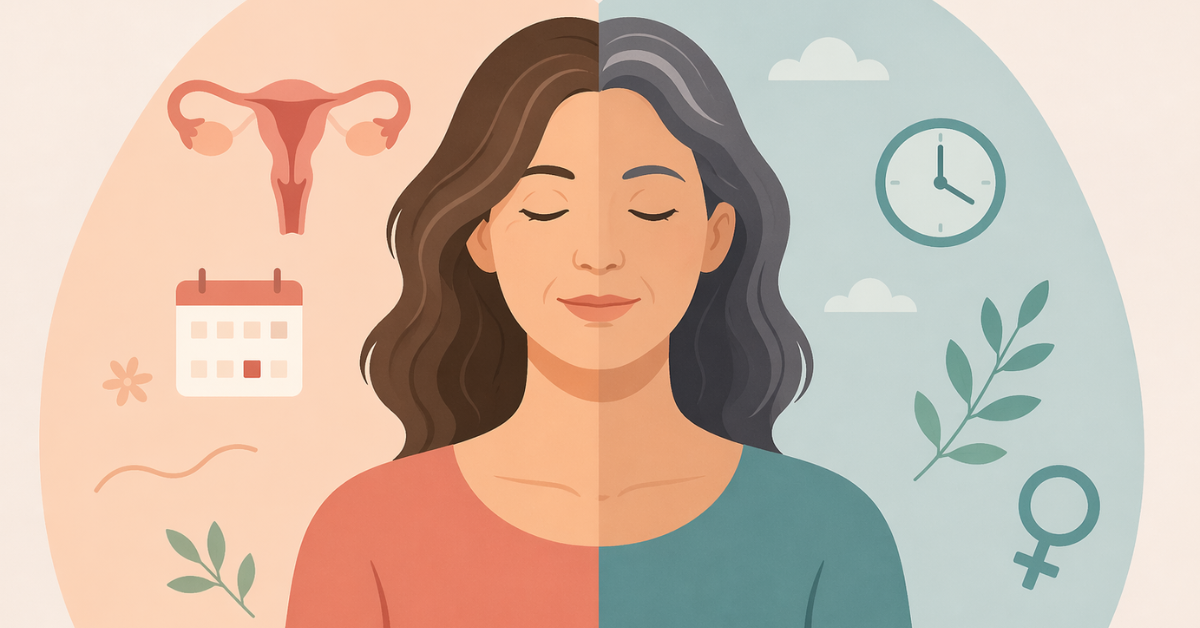
As women age, their bodies go through natural hormonal changes that can sometimes feel confusing or overwhelming. Two of the most commonly misunderstood phases are perimenopause and menopause. While they are closely related, they are not the same—and understanding the difference can help you better manage your health, emotions, and lifestyle.
In this guide, we’ll break down what perimenopause and menopause really mean, how to recognise the symptoms, and what your body is trying to tell you during these transitions.
What Is Perimenopause?
Perimenopause is the transitional phase leading up to menopause. It usually begins in a woman’s late 30s to early 40s, although it can start earlier or later depending on individual factors.
During perimenopause, the ovaries gradually produce less estrogen, causing hormonal fluctuations. This stage can last anywhere from a few months to several years.
Common Symptoms of Perimenopause
- Irregular menstrual cycles
- Mood swings and irritability
- Hot flashes and night sweats
- Sleep disturbances
- Fatigue
- Decreased fertility
- Changes in libido
These symptoms may come and go, making perimenopause feel unpredictable.
What Is Menopause?
Menopause is officially diagnosed when a woman has gone 12 consecutive months without a menstrual period. It marks the end of reproductive years.
The average age of menopause is around 45–55 years, though it can vary.
At this stage, estrogen levels drop significantly, and the body adjusts to a new hormonal balance.
Common Symptoms of Menopause
- Persistent hot flashes
- Vaginal dryness
- Weight gain
- Thinning hair
- Joint pain
- Memory issues or brain fog
- Reduced bone density
Unlike perimenopause, symptoms during menopause may feel more stable but can still impact daily life.
Key Differences Between Perimenopause and Menopause
|
Feature |
Perimenopause |
Menopause |
|
Timing |
Before menopause |
After periods stop for 12 months |
|
Hormones |
Fluctuating estrogen |
Low and stable estrogen |
|
Periods |
Irregular |
Completely stopped |
|
Fertility |
Reduced but possible |
No longer possible |
|
Symptoms |
Unpredictable |
More consistent |
Understanding these differences helps you recognise where you are in your journey.
What Your Body Is Trying to Tell You
Your body communicates through symptoms, and both perimenopause and menopause are signals of internal change—not problems.
1. Hormonal Imbalance Needs Attention
Fluctuating hormones can affect mood, sleep, and energy. Your body is signalling that it needs support through proper nutrition, movement, rest, and stress management.
2. Slower Metabolism
Weight gain during this phase is common. It’s your body’s way of adjusting to hormonal shifts, meaning lifestyle changes may be needed.
3. Bone and Heart Health Matter More
Lower estrogen levels can affect bone density and heart health. Your body is asking for more care through calcium, magnesium, vitamin D, and regular exercise.
4. Mental Health Is Important
Mood swings, anxiety, and brain fog are not “just in your head.” They are real responses to hormonal changes.
How to Manage Perimenopause and Menopause
While these stages are natural, there are effective ways to manage symptoms and improve your quality of life.
1- Maintain a Healthy Diet
Focus on:
- Calcium and magnesium-rich foods
- Leafy greens
- Whole grains
- Protein-rich meals
Avoid excessive sugar and processed foods.
2- Stay Physically Active
Regular exercise helps:
- Balance hormones
- Improve mood
- Maintain weight
- Strengthen bones
Even 30 minutes of daily activity can make a big difference.
3- Prioritize Sleep
Sleep disturbances are common. Try:
- Fixed sleep schedules
- Reducing screen time before bed
- Relaxation techniques
- Night-time tea
4- Manage Stress
Stress can worsen symptoms. Consider:
- Meditation
- Yoga
- Deep breathing exercises
5- Consult a Healthcare Professional
If symptoms become severe, medical guidance is important. Treatments may include:
- Hormone therapy
- Supplements
- Lifestyle adjustments
When Should You See a Doctor?
You should consult a doctor if you experience:
- Extremely heavy or prolonged periods
- Severe mood changes or depression
- Intense hot flashes affecting daily life
- Unusual pain or discomfort
Early guidance can help prevent complications.
Common Myths About Menopause
Myth 1: Menopause happens suddenly
Reality: It’s a gradual process that starts with perimenopause.
Myth 2: You can’t get pregnant in perimenopause
Reality: Pregnancy is still possible until menopause is complete.
Myth 3: Symptoms are the same for everyone
Reality: Every woman experiences this phase differently.
Final Thoughts
Perimenopause and menopause are not conditions to fear—they are natural phases of life that signal transformation. By understanding what your body is telling you, you can take control of your health and well-being.
The key is awareness, self-care, and seeking the right support when needed. With the right approach, this stage of life can be empowering rather than overwhelming.



Comments (0)